
Light and Energy
One way to think about light is as a wave, with the same general shape as a wave moving through water. But unlike water waves that need water to move around, light can move through any transparent material - from glass to air to the vacuum of space.
The light coming from the Sun and artificial lights in your house is often called white light for the color it puts out (mostly white-ish). But white light is actually a combination of all the different colors of light. If you break up the light you see with a prism or diffraction grating, you can see all the colors that make it up - the colors of the rainbow! In fact, raindrops are natural prisms, and a rainbow is the result of breaking light into it’s component colors.
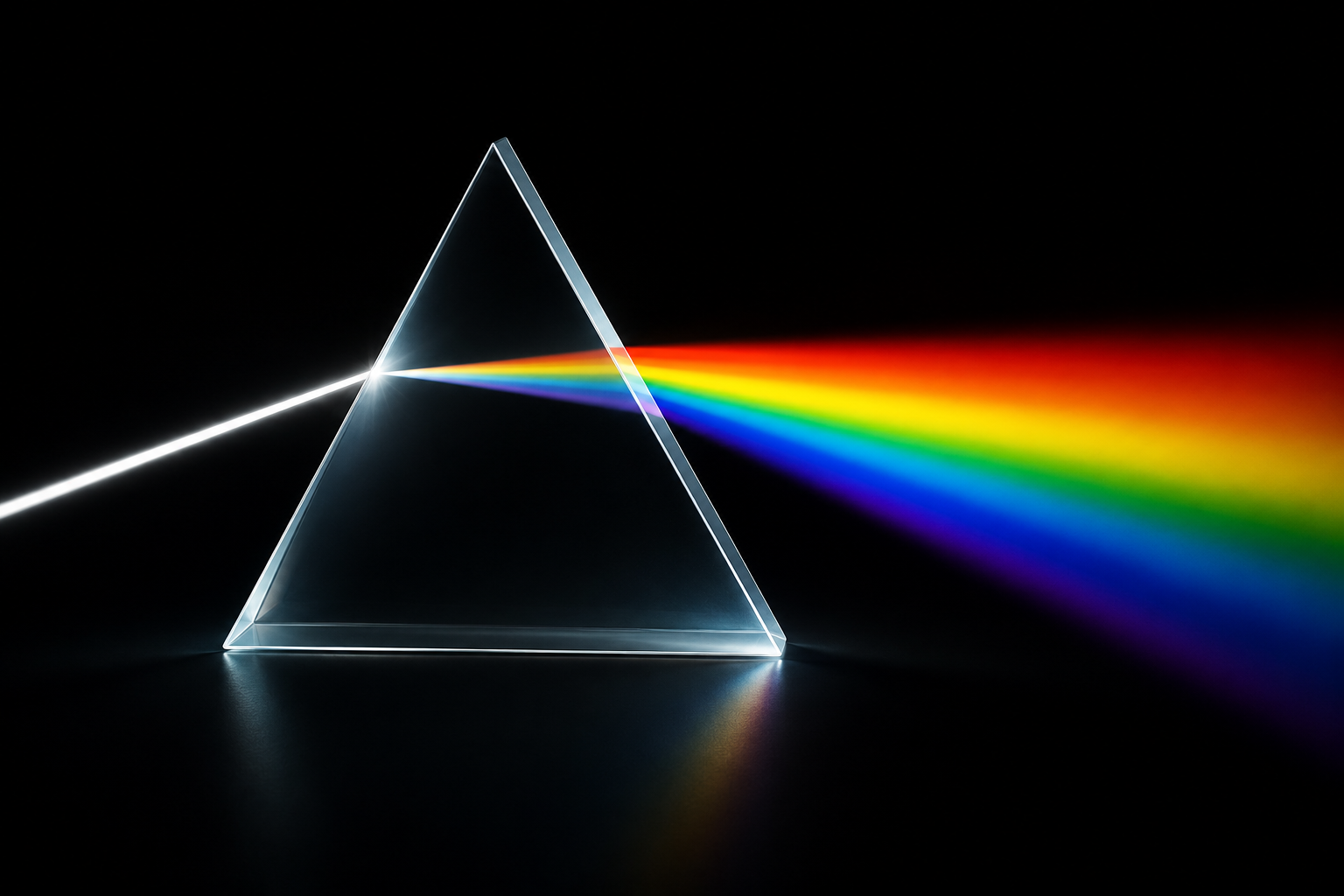
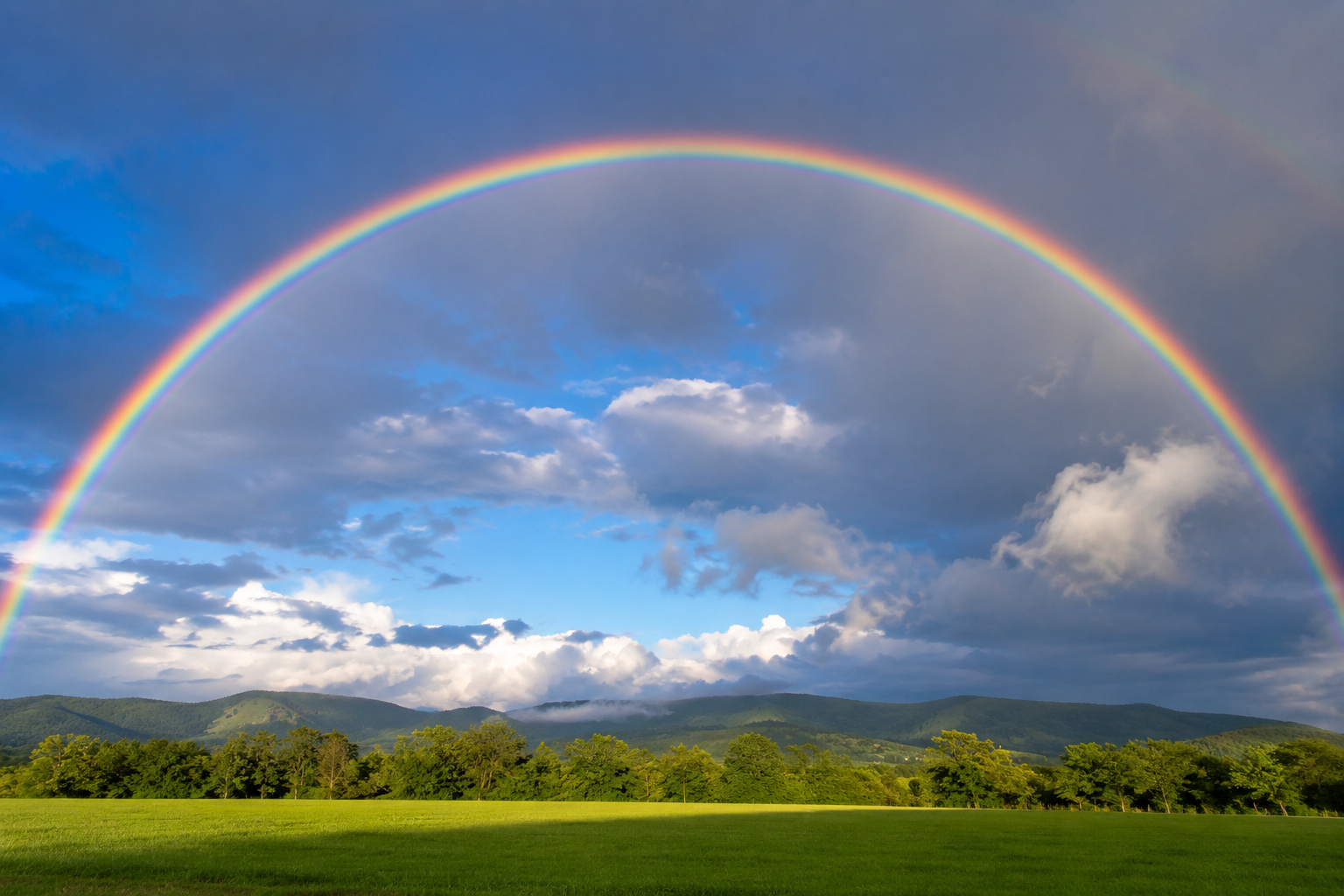
But those colors you see are only a tiny fraction of all the light that exists (known as the electromagnetic spectrum, or EM spectrum). There are more types of light beyond the red and beyond the blue - you just can’t see them with your (human) eyes.
In the image of a light wave below, the distance between two highest points (the crest of the wave) is known as the wavelength, and it’s measured in meters. Visible light waves are very tiny, so we measure them in nanometers (nm) instead, where 1 nm = 0.000000001 meter!
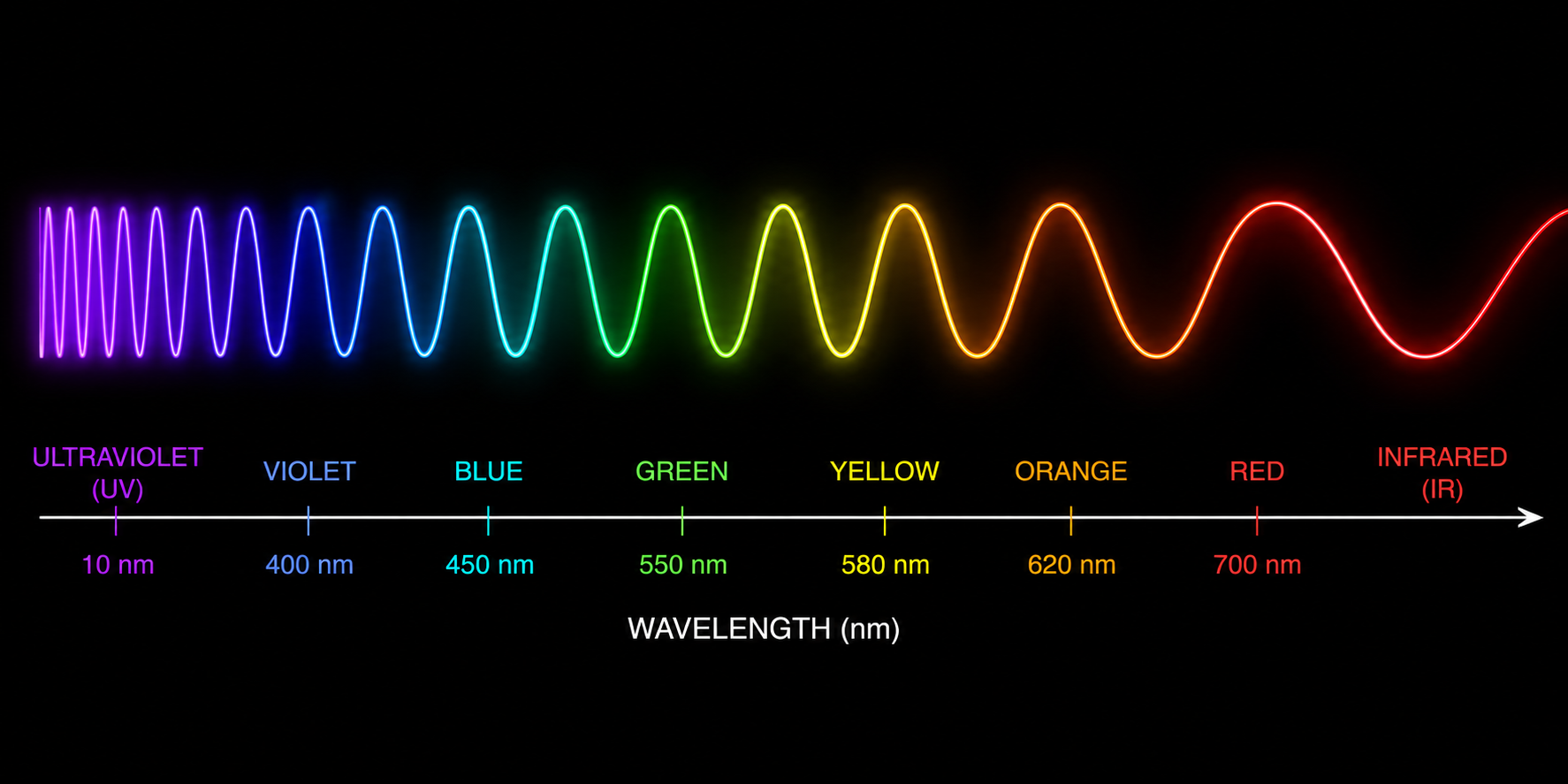
Visible light, the light we can see with our eyes, goes from 400 nm (violet light) to 700 nm (red light). Beyond the red, you get into the infrared (IR) part of the light spectrum. Warm objects, from freshly-baked cookies to you, emit IR light. Beyond the blue/violet, you get into the ultraviolet (UV) part of the spectrum. Very hot objects, like stars, emit UV light.
The smaller the wavelength of light, the “bluer” the light is (it’s closer to the blue part of the visible/UV spectrum) and the more energy it has. Longer wavelengths of light are “redder” and have less energy.
The fluorescent materials we focus on for this website absorb higher energy light (like UV) and then emit lower energy light (from blue/violet to red) as a result. While fluorescence can cover a much wider range of energies than this, this is the form of fluorescence we care about for fluorescent minerals and glass.