
20 Things That Glow Under UV Light
Adria Updike, Ph.D.
You don’t need to head to your local rock shop to find something fluorescent (although you certainly can!). All you need is a good flashlight (365 nm works better than 395 nm here). Chances are good you’ve got some fluorescent objects in your own home!
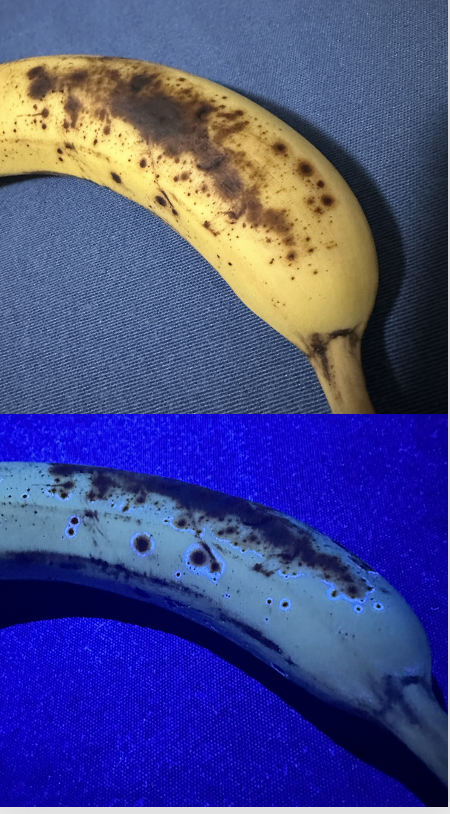
Ripening bananas under normal (top) and UV (bottom) light.
Honey
Yes, honey! You (probably) don’t even need to take it out of the container to see it fluoresce. Note that glass does a better job of blocking UV light than most plastics, so if you don’t see it fluoresce at first, try dimming the lights and/or squeezing a bit out.
Lemon Juice
There’s a reason it’s used to make invisible ink! You can learn more in our Experiments section under Learn.
Tonic Water
This is one of the brighter ones! Note that there’s a difference between tonic water and seltzer water (also known as club soda or sparkling water). Tonic water includes the chemical quinine, which gives tonic water it’s bitter flavor, fluorescence, and the ability to kill malaria (included in anti-malarial medications).
Fruit Loops…
… and some other brightly-colored breakfast cereals and candies. While some cereals are moving away from the bright colors (and the chemicals that cause fluorescence in the process) you can still find fluorescence among some of the original recipes.
Some energy drinks…
… and also some specific liquors (specifically absinthe). But despite it’s reputation, I’ve never seen much fluorescence from Mountain Dew. Maybe I’m trying the wrong flavors?
Vitamin B12
When mixed with water, B12 (also known as riboflavin) will fluoresce!
Highlighters
Anything with a “fluorescent” color will likely glow under UV light, including your highlighter pens. You can even dip them in water to make your water glow! Just don’t drink it.
Neon Stuff
Stickers, plastic, paint, and more! Neon colors are also called fluorescent colors.
Antique Glass and China
Some vintage glass used to contain chemicals that contributed to the color (like uranium for green/yellow/milky colors and cadmium for red) or the clarity (like manganese, lead, or selenium) which can cause fluorescence. Uranium glass (also known as Vaseline Glass or Custard Glass) is the brightest and most famous example, but you can often find the other colors in a dim room with a 365 nm flashlight. Note that if clear glass glows green, that’s manganese, not uranium - it’s easy to confuse the shades of green when you’re getting started on your collection. Uranium was also used in glazes, like the famous “radioactive red” Fiestaware (which does not fluoresce) and some forms of china for teacups and clock faces giving them a slight green color (which does fluoresce).
Vaseline
Not the glass this time, but the petroleum jelly you might have in the bathroom. It will turn a bright blue under UV light.
Jewelry
Many gemstones glow under UV light! Check out rubies (both natural and synthetic), emeralds (synthetic), pink cubic zirconia, imitation pearls, pink sapphires, and even diamonds. About a third of natural diamonds are fluorescent, with the most common color being blue (but you can also find yellow and even red!).
Money
The US doesn’t include a lot of fluorescent materials in it’s money, but you can find random fluorescent strings mixed into the “rag” used to produce money, and bills larger than $2 include plastic strips with fluorescent numbers to make money harder to counterfeit. Many other countries (including Canada and most of Europe) have plastic money with more interesting fluorescent features.
Driver’s License and State/Real IDs
Many official state and government documents include fluorescent materials to make them harder to fake. If you’ve ever had your ID checked at a bar or airport with a UV light, that’s what they are looking for!
Passports
Passports and documents like visas (for traveling abroad to certain countries) can include very elaborate fluorescent pictures! Check out all the pages - many, like the US passport, vary from page to page with hidden pictures. The picture page of the to the left is a page from a German passport. My personal favorite under UV light? Canada’s passports!
Your teeth!
That’s right! The collagen in your teeth is naturally fluorescent, and sometimes dental work is as well. Check it out in a mirror or with a friend!
-Adria
Bananas
As bananas start to mature and turn brown, they become more fluorescent. Look around the brown spots to see them glow under UV light!
Milk
Milk will fluoresce under UV light as well. Even powdered milk works!
Turmeric
Turmeric will glow under UV light when mixed with water.
Laundry Detergent
Laundry detergent includes bleach, a chemical well-known to glow under UV light. Not only is your detergent probably fluorescent, but white clothing washed in it will be as well!
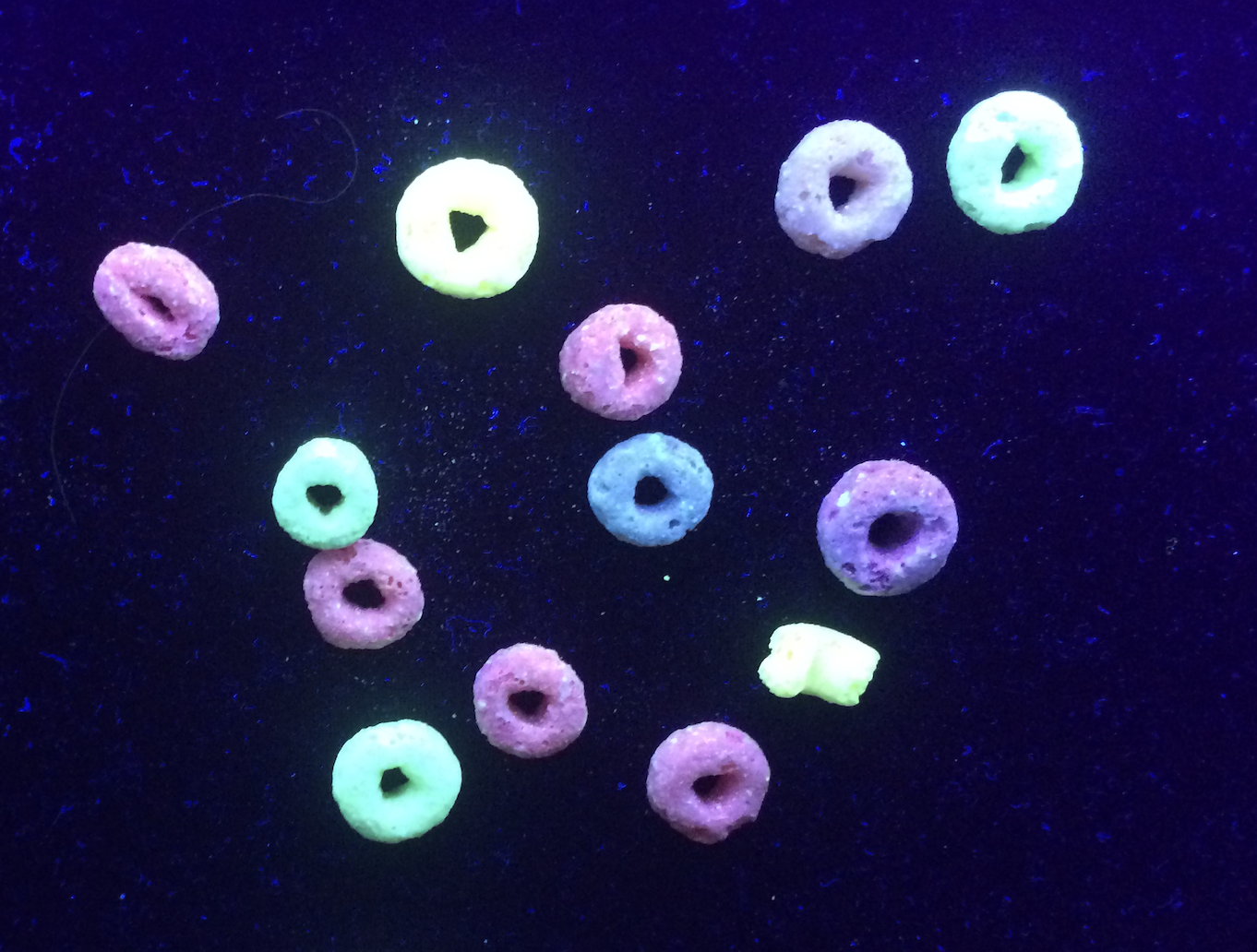
Fruit Loops under UV light.
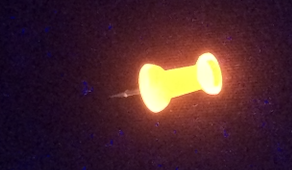
A neon orange thumbtack.
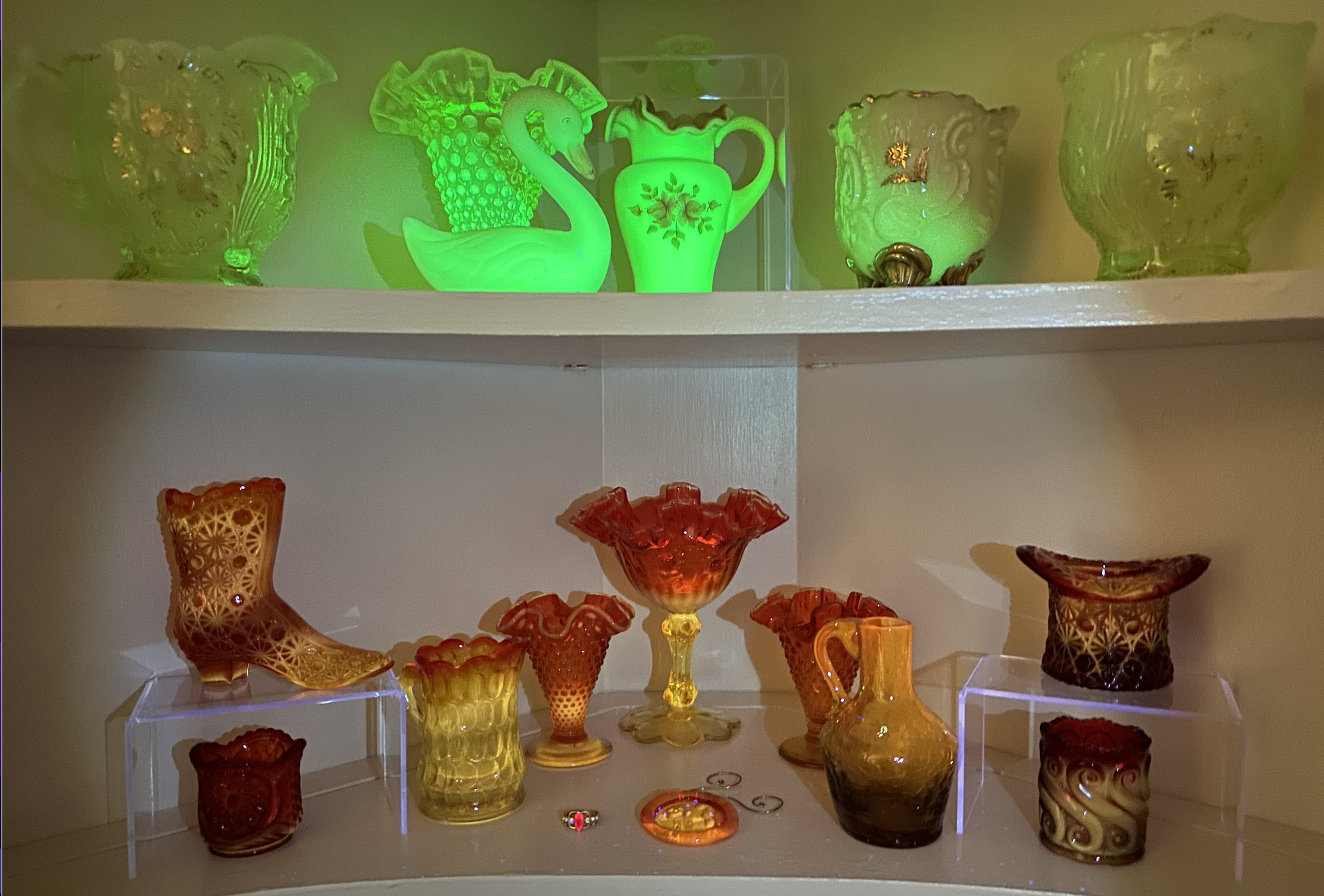
Uranium glass (top) and cadmium glass (bottom) from the author’s collection.
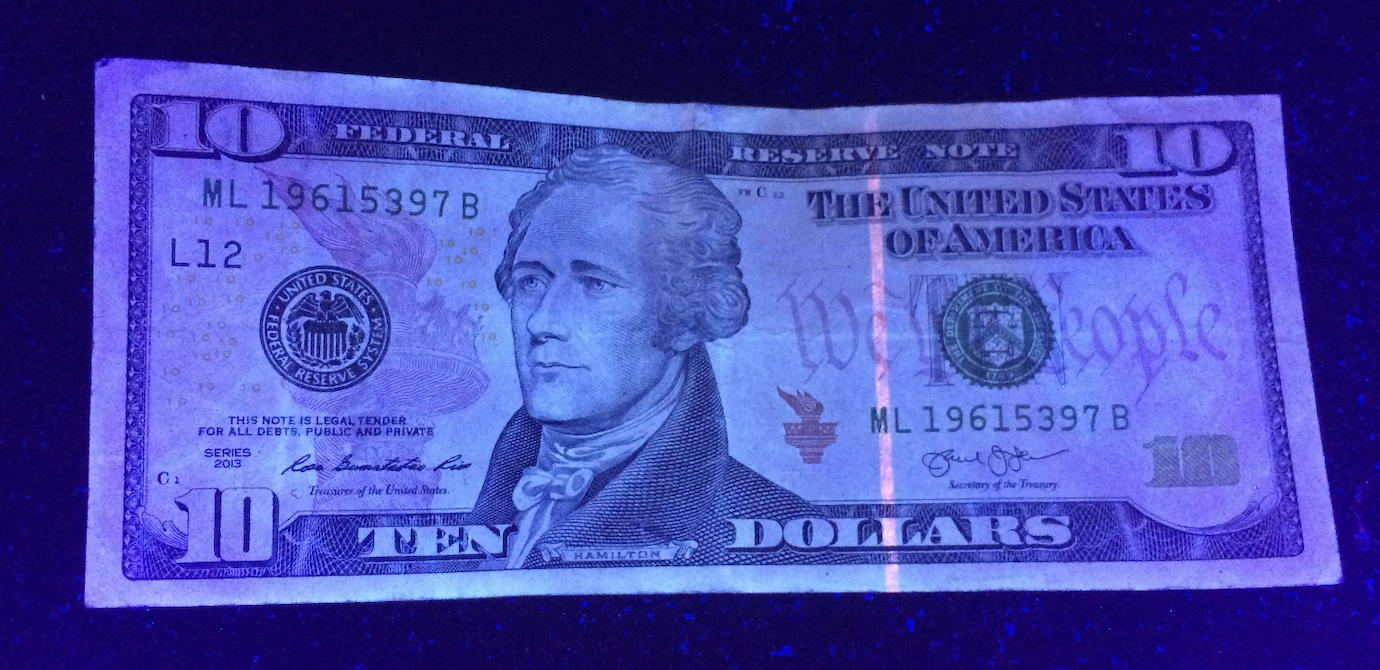
A US 10 dollar bill under UV light.
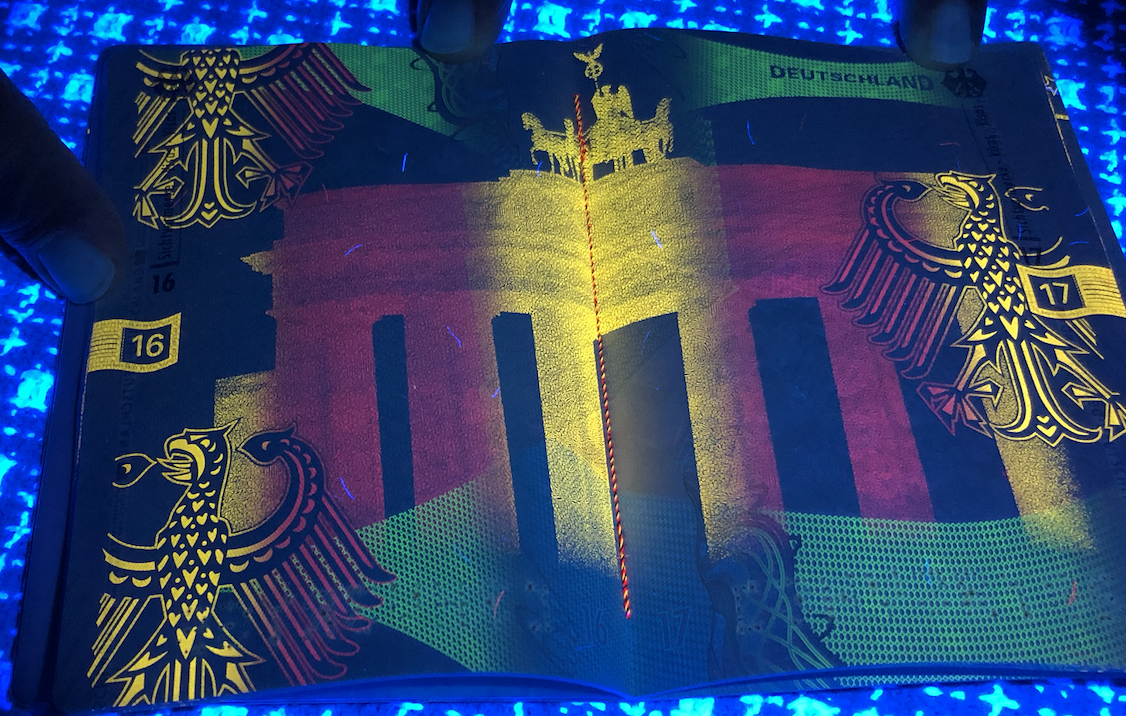
A page from a German passport.